
The holidays are a lot of things: magical, loud, full of pie. For a baby, they're also a whole lot of sitting in one spot. Long drives to Grandma's. Hours in the bouncer while the grown-ups cook. A swing that buys you just enough time to find the tape. Add sick season, when we're all trying to keep tiny ones home and away from crowds, and some babies spend most of their waking hours in one position or another.
None of that makes you a bad parent. Car seats save lives and bouncers save sanity. But all that "container time" adds up, and this time of year is when I start seeing the signs in my office.
What is "container baby" syndrome?
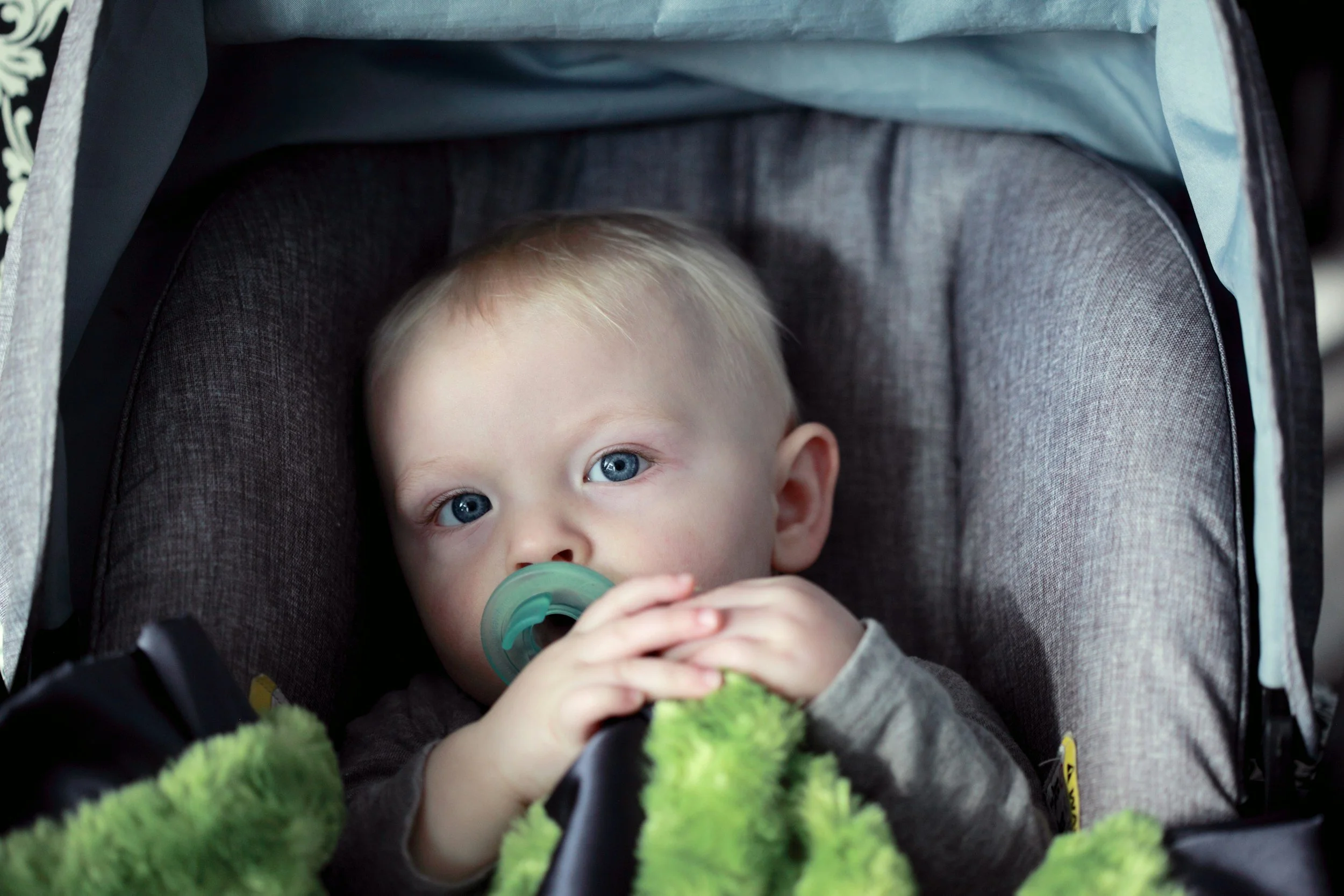
"Container baby" is the nickname for a baby who spends a big chunk of the day in gear that holds them in one position: car seats, swings, bouncers, loungers and strollers. When a soft, growing head rests the same way for hours, a few things tend to show up:
A flat spot on the back or one side of the head (plagiocephaly)
A favorite side, where your baby always turns one direction and fusses when you turn them the other way
A head tilt or a neck that seems tighter on one side (torticollis)
Tummy time meltdowns, or using the shoulders and mid-back to muscle through it
Feeding that's easier on one side than the other
These don't automatically mean something is wrong. Flat spots and head tilts can have other causes too, and every baby is on their own timeline. (If you're wondering what's typical for your baby's age, my guide to baby development milestones is a good place to start.) But they're worth a closer look, and the earlier, the easier.
The 2-hour car seat rule for holiday road trips
If you're driving for the holidays, here's the one to remember: plan to take your baby out of the car seat at least every 2 hours. This matters most in the first 6 months, before babies have solid head control. Build your stops around feeds and diaper changes so you're not adding extra ones.
A few more car seat reminders while we're here:
The car seat is for the car. Once you arrive, move your sleeping baby to a flat, safe sleep space instead of leaving them in the seat.
Skip the puffy coat under the straps. It squishes in a crash and leaves the harness too loose. Buckle in with thin layers, then put a blanket or coat over the top.
Preemies and young newborns may need breaks more often. Ask your pediatrician what's right for your baby.
Your holiday reset routine
You don't need a full workout plan. You need a few small habits that undo all that time spent in one position:
Floor time every day. A blanket on the floor is the best baby gear there is. Let them wiggle, reach and roll.
Tummy time in tiny doses. If your baby hates it, start over: 30 to 45 seconds counts. Try tummy time on your chest, across your lap, or on a rolled towel.
Switch sides on purpose. Alternate which arm you hold them in, which side you feed on, and which way they face in the crib or on the changing table.
Make the "wrong" side interesting. Put toys, faces and lights on the side your baby avoids so they want to turn that way.
Pass the baby, but mix it up. Holiday guests love holding babies. Ask them to try different holds, not just the one-arm cradle.

3 baby holds to try at home
I also teach a few specific holds and stretches. Here's how to do them at home. Which side to use and how long to hold depends on how your baby's body is moving, so I'll fine-tune them for your little one at your visit.
Guppy pose
Gently opens up the front of the neck and chest.
Sit on the floor or couch with your knees bent and your feet flat.
Lay your baby on their back along your thighs, with their head resting on your knees and their feet toward your belly.
Keep their head and shoulders supported by your legs and hands the whole time. Their head should never hang free.
Let their upper back and chest gently open up over your thighs while you rock slowly, rather than pressing them back.
Hold for 10 to 60 seconds, twice a day. Start short and stop if your baby gets upset.
Football hold
Encourages your baby to turn toward the side they avoid.
Tuck your baby along your side under one arm, like you're carrying a football.
Let their body rest along your forearm, with their head cupped in your hand.
Use the side I recommend for your baby, and use it for carrying, cuddling or feeding whenever it's easy.
Tiger-in-the-tree hold
A gentle tummy-time alternative, great for gassy babies.
Lay your baby tummy-down along your forearm, with their head resting in the crook of your elbow and turned to the side.
Let their arms and legs dangle on either side of your arm.
Put your other hand on their back to keep them steady.
Walk, sway or bounce gently. Switch arms unless I've asked you to favor one side.
Keep your baby's face clear and their head supported in every hold. If your baby cries hard or stiffens up, stop and try again later.
When to see a pediatric chiropractor
Book a visit if you notice a flat spot that's getting worse, a strong favorite side, a head tilt, or a baby who really struggles with tummy time or feeding on one side. We'll do a gentle exam, see where the tension is, and give you a plan you can actually do at home.
And a little heads up: I'm closed all of January. If something's been on your mind, now's a great time to get in. Book your visit online here.
Traveling with the whole family this year? Check out my companion post, Travel-Proof Your Spine This Holiday Season.
If your baby has trouble breathing, isn't eating or seems very sick, call your pediatrician right away.
